
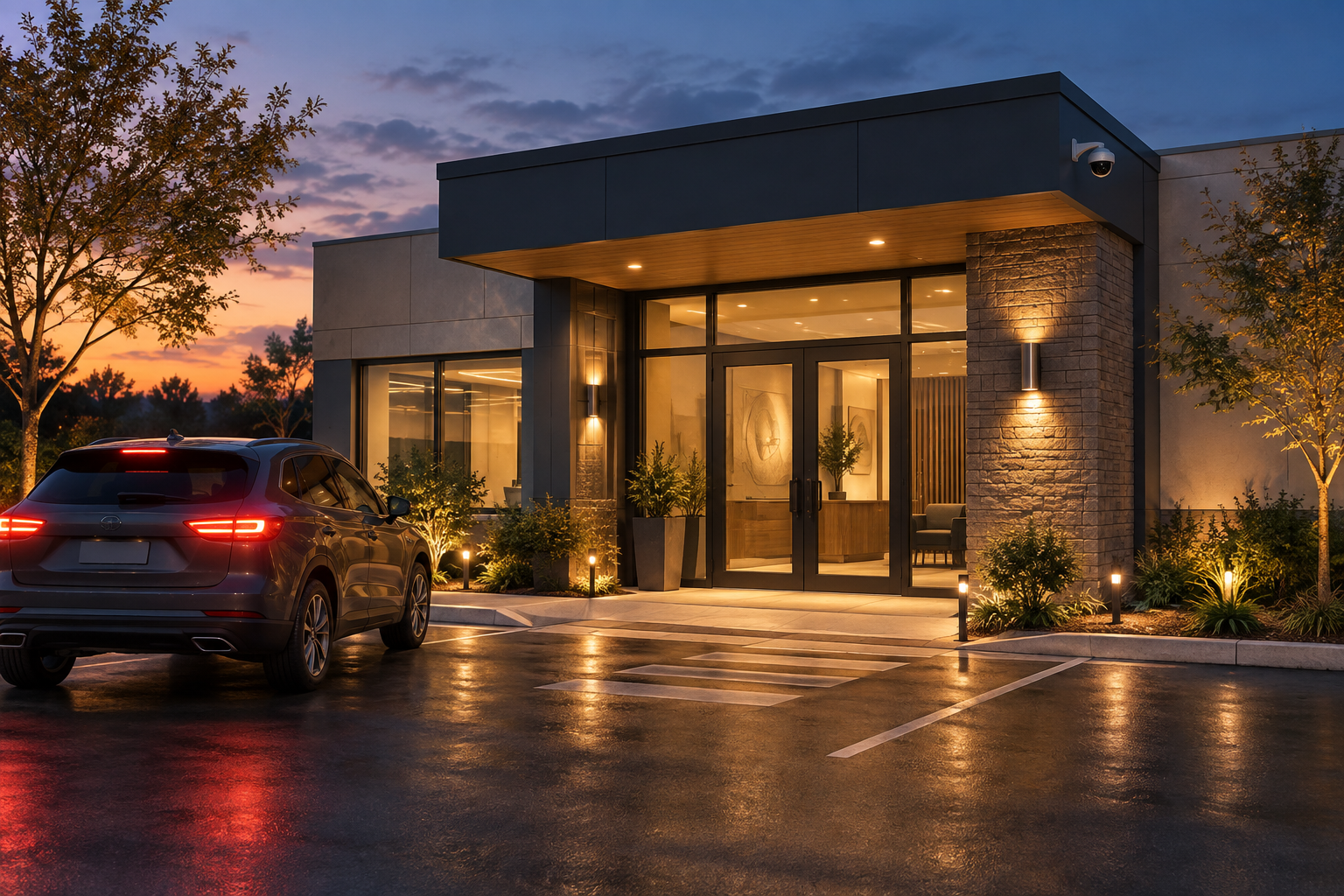
A camera demonstration at midday does not tell you how the system performs when your business is closed. An entrance that looks clear in daylight may face reflections, headlights, or uneven illumination after dark. If the important incident happens then, that is when the system needs to be evaluated.
Start with the question each view should answer. Is the goal to see activity near a fence, recognize someone at a doorway, or understand what happened in a loading area? Different objectives can call for different placements and settings.
Test a real event
Have an authorized person walk through the intended area at a realistic pace during a planned test. Review recorded footage, not only the live image. Check the point at which useful detail becomes visible and whether that detail survives movement.
A bright-looking image can still lose important detail. Axis’s image-quality troubleshooting guidance explains how exposure, gain, backlighting, and infrared reflections affect the result. Adjustments involve tradeoffs; simply making the picture brighter is not always the solution.
Include the normal surroundings
Test with the lights that will actually remain on after closing. Consider headlights at entrances, illuminated signs, and reflective surfaces near the camera. Seasonal changes or a new landscaping layout may also justify another look at a previously acceptable view.
Where license plates are a requirement, treat capture as a separate design task. A general overview image should not be assumed to deliver readable plates under every approach angle and lighting condition.
Record what was accepted
Agree on a short list of representative events and retain appropriate test results with the project documentation. Identify views that meet the goal and any limitations that remain. That gives future service work a useful reference point.
Avoid promising perfect identification in every circumstance. The practical aim is to test the conditions that matter, make informed adjustments, and clearly explain the result.
The Kelltech approach
Kelltech’s video work includes the supporting network, power, recording, and ongoing service. That matters when an image problem originates outside the camera itself. The design discussion can stay focused on useful footage under the property’s real conditions, with a local team available to address the complete system.
Ask Kelltech to review your after-hours camera coverage. Tell us which areas matter most after closing so the evaluation reflects your operating hours and security priorities.